

How Tomatoes Became Part of Egypt’s Culinary Story
May 29, 2026
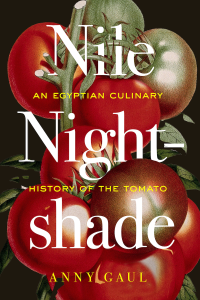
In her award-winning book “Nile Nightshade,” Assistant Professor of Arabic Anny Gaul traces the tomato’s path to Egypt and explores how it became central to home kitchens across the country.
By Jessica Weiss ’05
As tomatoes begin piling up at farmers markets and ripening in backyard gardens, Anny Gaul invites readers to look more closely at a familiar fruit.

For Gaul, assistant professor of Arabic in the School of Languages, Literatures, and Cultures and author of “Nile Nightshade: An Egyptian Culinary History of the Tomato,” the tomato offers a lens for exploring the relationship between food, place and community in modern Egypt. Though native to the Americas, by the end of the 20th century the tomato had become a staple of Egyptian cuisine—shaping kitchens and ideas of identity and belonging along the way.
Published in 2025, the book has earned widespread recognition. It was recently named a 2026 James Beard Media Award nominee in the Reference, History and Scholarship category. It also won Best Culinary History Book at the Gourmand World Cookbook Awards in 2025 and was shortlisted for the Nach Waxman Prize for Food & Drink Scholarship.
Gaul also runs a cooking blog called “Cooking With Gaul.” In a recent conversation, Gaul talked about what tomatoes can reveal about Egypt’s culinary history, how this everyday ingredient became the center of her research and what she is cooking this summer.
Tomatoes feel synonymous with summer in the U.S.—backyard gardens, sandwiches, farmers markets. Do tomatoes carry that same everyday familiarity in Egypt?
In Egypt, tomatoes are used in all kinds of ways: cut up raw in salads, used in sandwiches, made into sauces and cooked into stews.
The difference is in terms of the seasonality. Because it has a different climate and different geographical characteristics, in Egypt you can get tomatoes year round and there is an expectation that you can always get a good tomato.
Your book traces how tomatoes arrived in Egypt. What surprised you most about that history?
I figured there would be a paragraph or two explaining exactly how tomatoes traveled from the Americas to what we now call the Middle East. Instead I spent an entire summer going down rabbit holes. The evidence is really fragmentary, and what I realized is how many possible paths the tomato could have taken. The tomato originated in the highlands of western South America; it was domesticated in what is now Mexico after Spanish conquistadors encountered it in the early 16th century. It arrived in Egypt sometime during the Ottoman era—between the 17th and 18th centuries. It may have arrived through the Mediterranean, but it’s just as likely it came through the Pacific, the Indian Ocean and the Red Sea. I was never able to find a definitive answer.
However the tomato arrived, knowledge about how to grow it and cook with it could have come from so many different places. The tomato becomes a reminder that Egypt has always been connected to many different worlds: African worlds, Indian Ocean worlds, Asian worlds.
Tomatoes are famously both a fruit and a vegetable, and they can be sweet, acidic, savory and incredibly versatile. What makes them such a compelling ingredient?
In the United States at least, the tomato is legally a vegetable, although it’s botanically a fruit. But tomatoes are also cultivars. They’re ingredients. I argue that they’re a staple. Tomatoes are so many things. That’s part of why they’re so interesting to write about and so versatile in the kitchen.
And in Egypt, people often talk about the sweetness of tomatoes—that a good tomato should be really sweet. An Egyptian reader of the book who attended a recent book talk I gave described the tomato as the "wallpaper" of the Egyptian kitchen, which is a turn of phrase I really love. They’re always there in the background, and so many things happen against that backdrop.
You’ve written that tomatoes were “hiding in plain sight.” What made you realize they could tell a much bigger story?
There was a moment while I was doing dissertation research in the Egyptian National Archives on the history of home kitchens in Egypt and Morocco. I was talking with one of the archivists about kitchens, and she told me, “If you really want to understand the Egyptian kitchen, you should understand tasbika.” Tasbika is a ubiquitous Egyptian stewing technique that involves tomatoes.
That was the moment where I understood I needed to start paying close attention to tomatoes, integrating questions about them into oral history interviews and paying closer attention to them in the texts I was studying.
Later, as I turned the dissertation into a book, I kept coming back to the tomato because it captured so many contradictions I wanted to explore: how something relatively recently introduced could become so central to what many people think of as their traditional culinary heritage.
Your research included cookbooks, archives, oral histories and even kitchen tools. What did those sources reveal?
I first started looking at Egyptian cookbooks while browsing Cairo’s used book markets during graduate school. A lot of the authors of these cookbooks had trained in domestic science in England, then came back, translated what they had learned into Arabic and included local recipes. So you’ll see classic French sauces alongside Ottoman recipes and local tomato-based dishes all in the same book.
Much culinary knowledge isn’t written down—it’s learned by cooking with other people. So alongside archival research, I conducted oral histories and asked people to describe their grandmothers’ kitchens: what they looked like, what they smelled like, what was being cooked there.
Sometimes people would bring out older kitchen tools from their grandmother and we could physically handle them. That changes how you understand a recipe. If you imagine grating tomatoes by hand with a heavy brass strainer for a large family, you understand the labor behind a dish in a different way.
One of the big ideas in the book is that food can shape belonging and identity. What can tomatoes reveal about what tastes “Egyptian”?
The tomato shows us that the category of “Egyptian”—or any national category—isn’t fixed. It changes over time, and humans have agency in shaping that change. Tomatoes are now considered quintessentially part of Egyptian cuisine, but that wouldn’t have been the case 200 years ago. It was a whole lot of human interventions and decisions that brought about that transformation.
What do you hope readers take away from “Nile Nightshade”?
I hope people come away from the book with an appreciation of culinary knowledge as a significant form of knowledge wherever it’s practiced. A lot of what my book tries to do is consider domestic labor and culinary labor as significant forms of knowledge in their own right. This is not something people automatically know how to do. It’s something they learn, and it involves a lot of skill and knowledge.
And I think the book also gives us a lot to think about in terms of the production of tradition—what we consider traditional practices and how quickly those can change. Our everyday choices and practices shape those things.
For readers inspired by summer tomatoes, Gaul recommends making a tasbika-style tomato stew (“with whatever seasonal vegetable looks best at the farmers market”) or a sweet tomato jam.
Top photo courtesy of Adobe Stock by Kyrylo Ryzhov.