

ARHU Scholar Looks to Indonesia for AI Lessons
March 02, 2026

Communication lecturer Lamia Zia received a Council on Foreign Relations fellowship to support the new project.
By Jessica Weiss ’05
Adopting artificial intelligence in government isn’t just about building systems; it’s about explaining them, earning trust and understanding how people respond. That’s the terrain Lamia Zia studies and teaches.
A communication lecturer and affiliate of the Artificial Intelligence Interdisciplinary Institute at Maryland (AIM), Zia will travel to Indonesia this summer as a Council on Foreign Relations (CFR) fellow to examine how government agencies in one of the world’s most populous nations are integrating AI into policymaking and national security, with special attention to models of human-machine collaboration.
Based in Jakarta from June through January 2027, Zia plans to split her time between academia and the Indonesian government. Her research will explore how the government works alongside intelligent systems and whether emerging technologies are being adopted through processes similar to those in the United States, or different pathways altogether.
She is particularly interested in what scholars often call “leapfrogging,” when countries adopt new technologies by skipping intermediate stages of development. Rather than assuming innovation flows in one direction, she wants to understand what the United States might learn from those approaches.
“There’s a lot we can learn from the vibrant, complex and rapidly transforming democracies of the Global South,” she said. “The research promises to deepen scholarly understanding of digital governance, policy innovation and national security.”
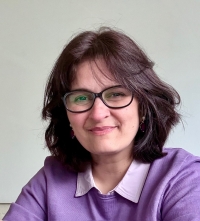
Zia is currently completing a doctorate in statecraft and national security at the Institute of World Politics, where her research examines how emerging technologies, cyber strategy and digital communication shape national security policy.
Indonesia drew her attention for its geopolitical importance, significant investment in artificial intelligence and strong local technology sector. In recent years, Jakarta has used AI as part of its Jakarta Smart City initiative to address persistent flooding. By gathering real-time data, predictive models help forecast water levels in high-risk districts, allowing officials to take preventive action before major storms.
In her early research, Zia also found widespread use of locally developed digital platforms rather than imported ones: “They’re believing in their own technology,” she said.
At UMD, Zia teaches both communication students and computer science majors at College Park, two groups she says approach technology from very different perspectives. In one course, students design public-facing digital literacy messages. In another, technically trained students must explain complex cybersecurity concepts to non-experts.
The contrast underscores what she sees as a central challenge in the current AI era: translating technical capability into shared understanding.
Zia recently introduced a course on AI in the digital age that combines ethical debate with hands-on experimentation. Students build chatbots, produce AI-assisted media and document their interactions with automated systems, reflecting on what feels helpful, unsettling or missing in human-AI relationships. They also debate responsibility and ownership through what she calls the “three Cs”: consent, credit and compensation.
The international experience, she said, will bring a new layer of context to her classes and can “enrich our academic community.”
The CFR fellowship is expected to culminate in a manuscript and policy briefs connecting her findings abroad to both scholarship and teaching at UMD—work she hopes will give students broader global context for the technologies they’ll live and work alongside when they graduate.
“Students entering this world should know what they’re stepping into,” she said.
Image of the skyline of Jakarta courtesy of Adobe Stock.